Silence and Cedar: The Slow Architecture of Western Norway
Words by Soren Kristensen • Photography by 111111 Editorial
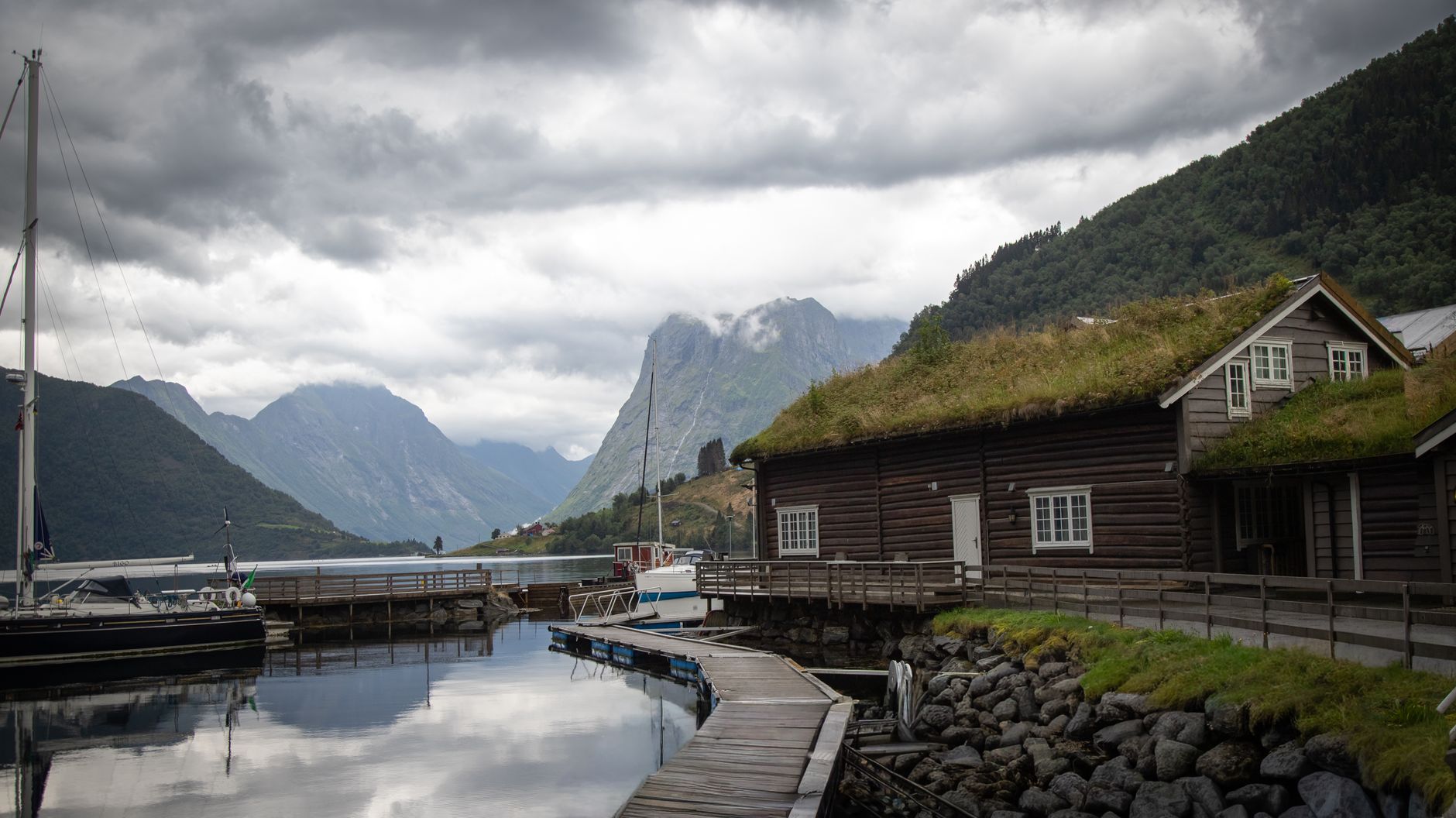
To understand the quiet valleys of western Norway, one must first surrender to the stillness of its water. Gliding past sheer metamorphic cliffs rising hundreds of meters into low-hanging clouds, sound behaves differently. Echoes are swallowed by deep pine forests and wet moss. Here, human dwellings are not built to dominate the landscape, but to shelter gently beneath its grandeur.
The Philosophy of the Hytte
For centuries, the traditional Norwegian hytte (cabin) represented basic respite from severe elements—a refuge of dry pine, cast iron hearths, and sod roofs. In recent decades, however, contemporary architects such as Todd Saunders and Rever & Drage have reinterpreted this vernacular into masterpieces of contemplative minimalism.
These modern structures leverage dark-stained kebony pine, zinc roofing, and expansive triple-glazed panes oriented toward unpeopled fjords. There is an intentional sparseness within: built-in benches, wool textiles spun locally in Innvik, and reading nooks where daylight is treasured like a fleeting guest.
"We do not build to conquer the elements, but to create a warm frame from which one can observe infinity without freezing."
Stepping Away from the Cruise Routes
While thousands of day tourists flood into Flåm during peak summer mid-days, true serenity lies barely twelve kilometers upstream along unpaved secondary trails. In hamlets like Undredal, goat cheeses are still cured using centuries-old brine techniques, and small community sauna huts float on the water's surface, offering travelers steaming cedar solace followed by an invigorating leap into sub-arctic depths.
Navigating this region requires patience. Ferries operate on strict tidal schedules, tunnels weave kilometers through granite cores, and fog regularly slows traffic to a tranquil walking pace. Yet it is precisely this imposed slowness that invites genuine presence.